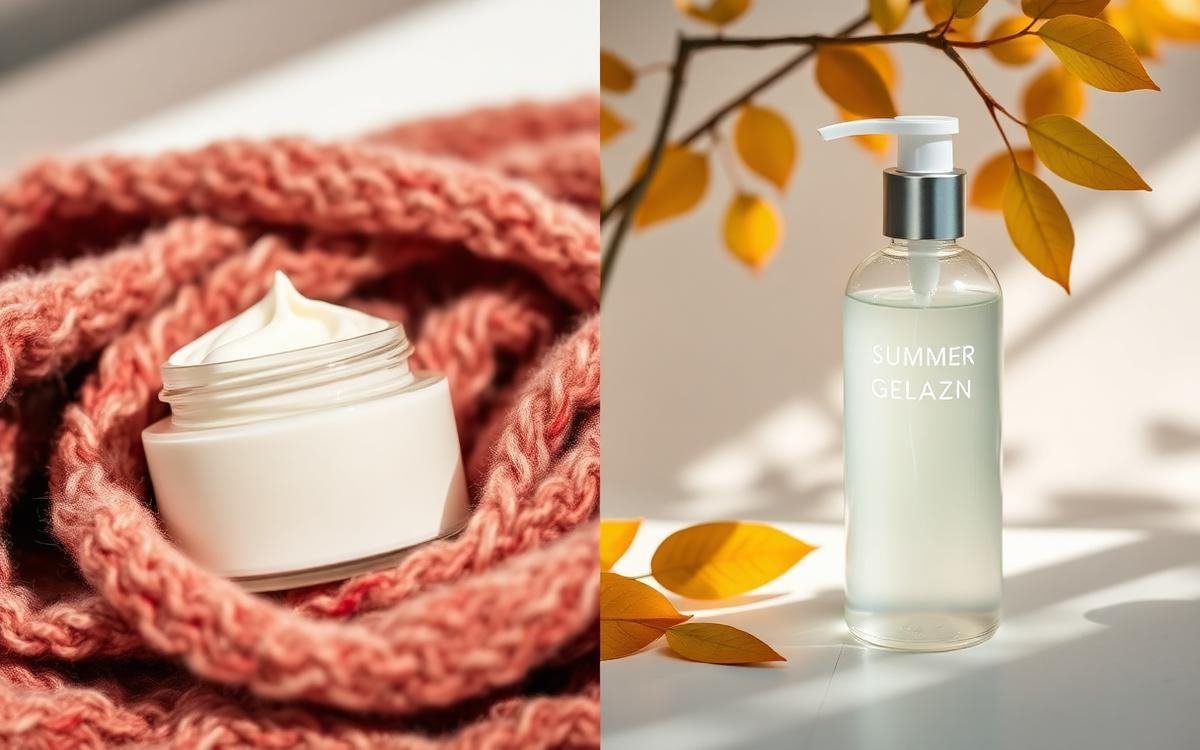
Using the same skincare routine in January and July is like wearing the same coat all year. Humidity, temperature and UV index all shift dramatically across the seasons, and the routine that kept your skin comfortable in winter can suffocate it in summer.
Why Skin Changes With the Seasons
Cold air holds less moisture, and indoor heating drops indoor humidity to desert levels, accelerating transepidermal water loss. In summer, heat and humidity increase sebum production and sweat, while UV levels rise sharply. Your barrier is responding to the environment, not misbehaving.
Winter: Protect and Replenish
Switch from a foaming cleanser to a cream or oil cleanser. Layer a hydrating essence or hyaluronic acid serum on damp skin, then seal with a richer cream containing ceramides, squalane or shea butter. Reduce exfoliation to once a week and lower retinoid frequency if you see flaking. Add a facial oil as a final occlusive step at night, run a humidifier at 40–50% humidity, and keep using SPF — snow reflects up to eighty percent of UV radiation.
Spring: Reset and Rebalance
As humidity rises, step down to a lighter cream and gradually reintroduce actives. This is the ideal season to restart or increase a retinoid and to address winter dullness with gentle AHA exfoliation. Spring also brings pollen: if you experience seasonal redness or itching, simplify your routine, rinse your face after being outdoors, and prioritise barrier-repair ingredients.
Summer: Lighten and Defend
Move to a gel cleanser and an oil-free gel moisturiser. Antioxidant vitamin C in the morning boosts your sunscreen's protection against free radical damage. Use SPF 30–50 every day and reapply every two hours outdoors — a single application in the morning is not sufficient protection for a day at the beach. Keep a facial mist and blotting papers for humidity, and treat sweat gently: rinse rather than scrub.
Autumn: Repair the Summer Damage
Autumn is the best window for corrective work, since UV exposure is falling. Address hyperpigmentation with vitamin C, niacinamide, azelaic acid or a stronger retinoid, and consider professional peels or laser treatments now rather than in high summer. Begin thickening your moisturiser as the temperature drops, before dryness sets in.
Constants All Year Round
Four things never change: daily sunscreen, gentle cleansing, consistent hydration, and barrier respect. Everything else — textures, actives, frequency — is a dial you turn with the weather.
How to Transition Without Irritation
Change one product at a time over two to three weeks rather than swapping your whole shelf overnight. Watch how your skin behaves for a week before the next change. If tightness, stinging or flaking appears, you have moved too fast: return to a simple cleanser, moisturiser and SPF for five days, then rebuild.