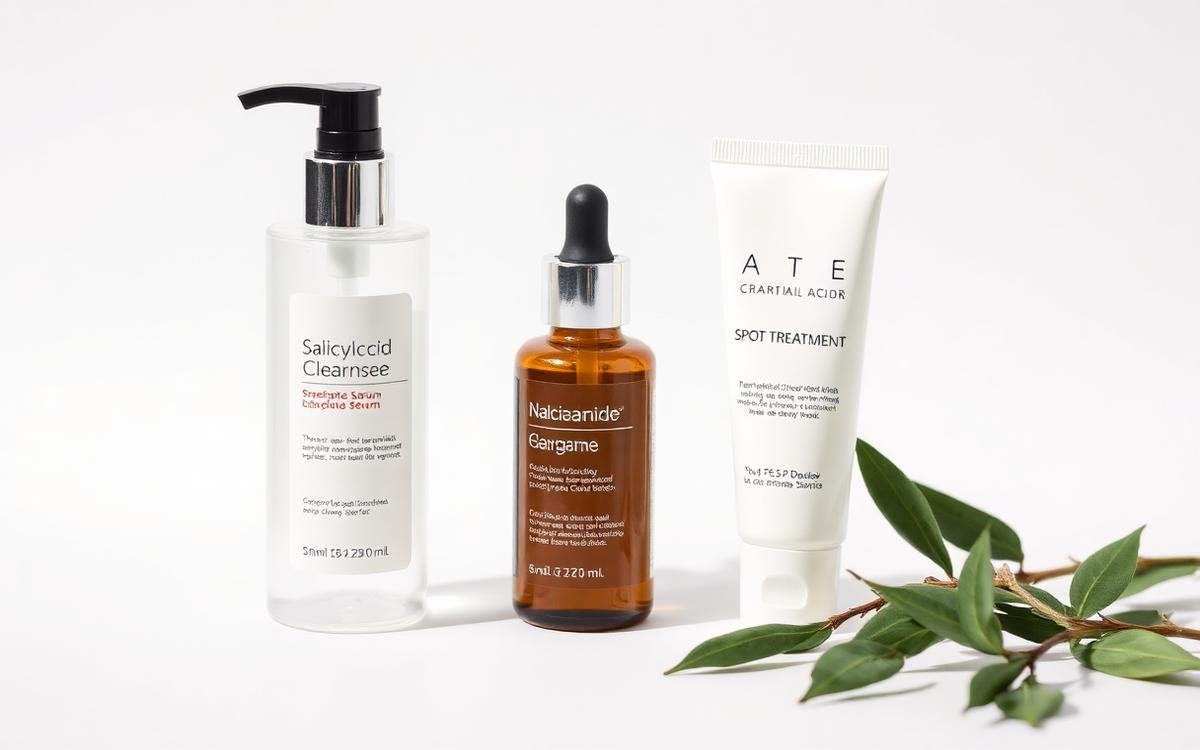
Acne is not a hygiene problem and it is not a character flaw. It is a predictable interaction between excess sebum, sticky dead skin cells, C. acnes bacteria and inflammation — and every one of those four factors responds to the right routine.
Why Breakouts Actually Happen
A pore becomes a blemish when hormones drive up sebum production, dead cells fail to shed cleanly, and the resulting plug traps bacteria. Inflammation follows, producing everything from small closed comedones to painful cystic nodules. Understanding this chain matters because each step of a good routine targets one link in it.
Step 1: Cleanse Gently, Twice a Day
Harsh foaming cleansers strip the barrier and trigger rebound oil production. Choose a gentle gel cleanser with 0.5–2% salicylic acid, a beta hydroxy acid that is oil-soluble and can therefore travel inside the pore to dissolve the plug. Use lukewarm water, thirty seconds of massage, and pat dry — never scrub.
Step 2: Treat With Proven Actives
Benzoyl peroxide (2.5–5%) kills acne bacteria and is best for inflamed pustules; higher percentages are not more effective, only more irritating. Niacinamide (5%) regulates sebum, calms redness and fades post-acne marks. Adapalene 0.1%, an over-the-counter retinoid, normalises cell turnover and prevents new comedones — it is the single most valuable long-term product for most acne-prone skin.
Introduce one active at a time, every third night, and build up. Applying everything at once is the fastest route to a damaged barrier and worse breakouts.
Step 3: Moisturise, Always
Skipping moisturiser is the most common mistake. Dehydrated skin overproduces oil and reacts badly to actives. Use an oil-free, non-comedogenic gel-cream with ceramides, glycerin or hyaluronic acid. The 'sandwich method' — moisturiser, retinoid, moisturiser — dramatically reduces irritation for sensitive skin.
Step 4: Sunscreen Every Morning
Acne treatments increase photosensitivity, and UV exposure darkens post-inflammatory hyperpigmentation, making old marks last months longer. A lightweight mineral or fluid SPF 30–50 labelled non-comedogenic is essential every single morning, indoors and out.
What to Avoid
Skip alcohol-heavy toners, apricot-shell scrubs, DIY lemon juice, toothpaste spot treatments, and picking. Each one damages the skin barrier or drives inflammation deeper, converting a spot that would have healed in five days into a scar that lasts years.
Lifestyle Factors Worth Fixing
Change pillowcases twice weekly, clean your phone screen, wash makeup brushes fortnightly, and rinse your face after sweating. Evidence links high-glycaemic diets and, for some people, skim dairy to increased breakouts — worth testing for eight weeks before drawing conclusions. Manage stress and sleep: cortisol directly increases sebum output.
When to See a Professional
If you have deep, painful cysts, scarring, or no improvement after twelve consistent weeks, see a dermatologist. Prescription tretinoin, oral antibiotics, hormonal therapy or isotretinoin exist for good reason, and early treatment prevents permanent scarring.
Patience Is Part of the Routine
Skin cells take roughly twenty-eight days to turn over, and most actives need eight to twelve weeks to prove themselves. Photograph your skin monthly rather than judging it daily — progress is real but slow, and consistency beats intensity every time.