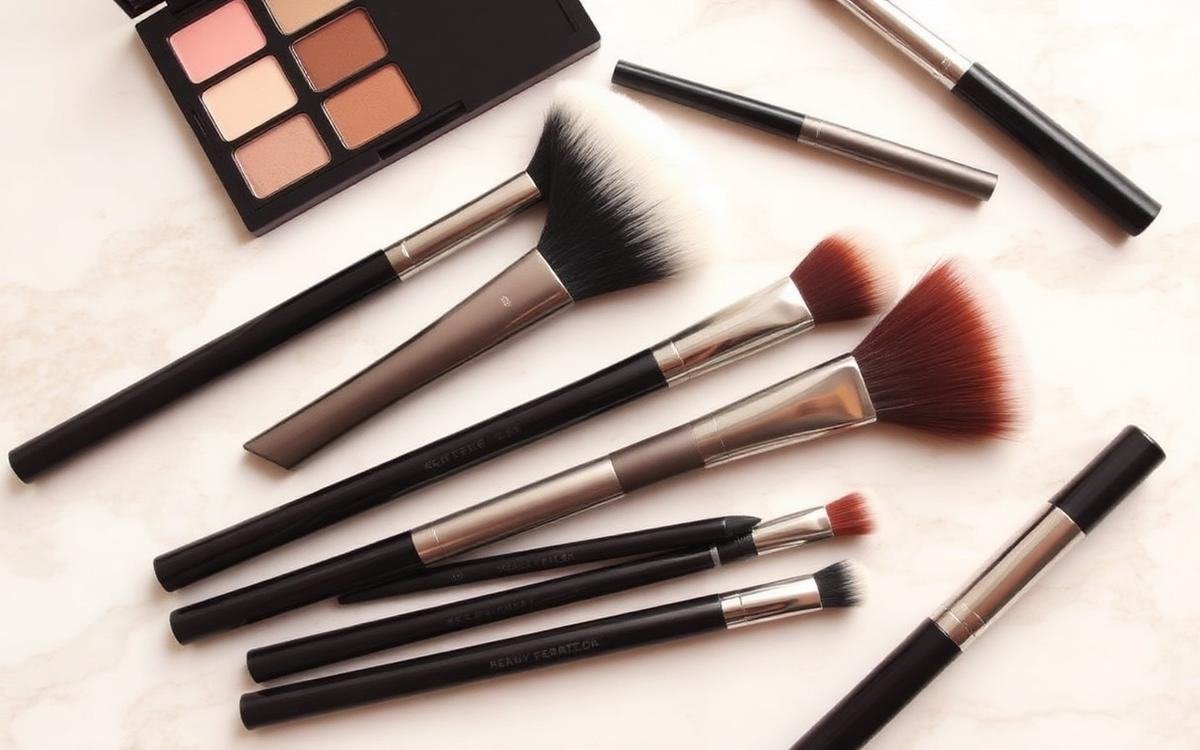
Most makeup problems blamed on products are actually brush problems. The right tool spreads product evenly, and the wrong one leaves streaks no formula can fix.
The Eight Brushes You Actually Need
A flat-top kabuki for foundation, a small dense buffing brush for concealer, a fluffy tapered brush for powder, an angled brush for blush and contour, a fan brush for highlighter, a flat shader for eyeshadow packing, a fluffy blending brush for the crease, and a small angled brush for brows and liner. Everything else is optional.
Natural vs Synthetic
Synthetic bristles are non-porous, so they do not absorb liquid — always use them for foundation, concealer and cream products. Natural bristles hold and diffuse loose powder beautifully, so they suit eyeshadow, blush and setting powder. Modern synthetics now perform well for powder too, and they are cruelty-free.
Foundation Technique
Apply foundation in dots across the face, then buff in small circles with a flat-top brush before finishing with light downward strokes to lay facial hair flat. A damp sponge over the top presses the product in for a skin-like finish and removes any brush texture.
Eyeshadow Technique
Pack colour on the lid with a flat shader using a patting motion — sweeping loses pigment. Switch to a clean fluffy brush for the crease and use windscreen-wiper motions just above the socket line. One brush for colour, one for blending, always.
Blush, Bronzer and Highlight
Tap off excess before touching your face, and build in thin layers. Angled brushes follow the cheekbone naturally. For highlighter, a fan brush gives a soft sheen and a small dense brush gives intensity — choose by the finish you want, not the product.
Cleaning and Care
Wash face brushes weekly and eye brushes every two weeks with gentle shampoo or solid brush soap in lukewarm water, keeping water away from the metal ferrule where glue lives. Reshape the head, then dry flat with the bristles hanging over the edge of a counter. Never dry brushes upright — water rots the glue and sheds bristles.
When to Replace Them
A good brush lasts years. Replace when bristles splay permanently, shed constantly, or feel scratchy after washing. Cheap brushes that shed on day one will never improve — one good brush beats a ten-piece bargain set.