
Achieving healthier-looking hair relies on a balance of proper scalp care, damage prevention, and moisture management. Hair strands are made of dead keratin proteins, meaning you cannot “heal” damaged ends—instead, healthy haircare habits focus on protecting new growth at the root and preserving existing lengths.
1. Focus Wash Day on the Scalp
Your scalp is an extension of your facial skin and requires regular cleansing to remove dead skin cells, excess sebum, and product buildup.
- Cleanse the roots, not the ends: Apply shampoo directly to your scalp and massage gently with the pads of your fingers (never your fingernails). As you rinse, the suds will run down the lengths of your hair, cleaning them without stripping natural moisture.
- Match wash frequency to your scalp type: Oily scalps may require daily or alternate-day washing, while dry or coarse textures thrive with 2–3 washes per week.
- Double cleanse when using heavy products: If you use dry shampoo, silicones, or heavy styling waxes, perform two back-to-back shampoo applications to clear the hair follicles.
2. Protect and Condition the Lengths
Conditioner smoothes the hair cuticle—the outermost protective layer—reducing friction, improving shine, and preventing split ends.
- Apply conditioner from mid-lengths to ends: Avoid applying rich conditioners directly to your roots, which can weigh hair down and make the scalp appear greasy.
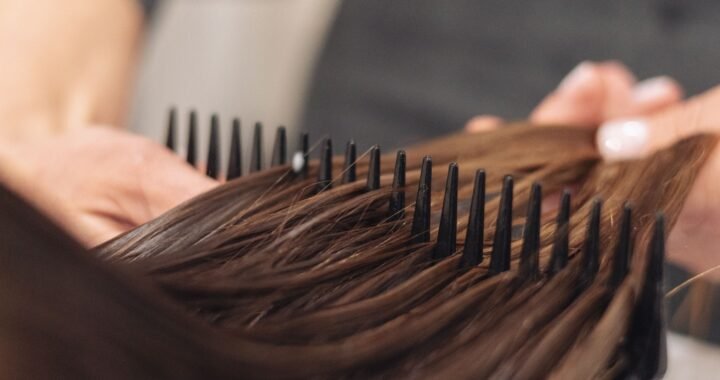
- Use a wide-tooth comb in the shower: Distribute conditioner evenly by gently combing through wet hair while the product is still applied.
- Incorporate a Weekly Hair Mask: Swap your standard conditioner for a deep-conditioning mask once a week to restore lost moisture and elasticity.
3. Handle Wet Hair with Extreme Care
Hair is at its weakest and most elastic state when wet, making it highly susceptible to snapping and micro-tears.
- Ditch traditional terrycloth towels: Rough towel drying creates friction, causing frizz and breakage. Instead, gently squeeze out excess water using a microfiber towel or a soft cotton T-shirt.
- Detangle from the bottom up: Always start brushing or combing at your ends, working through tangles in small sections before moving up toward the roots.
4. Practice Smart Heat Styling
Excessive heat breaks down the internal hydrogen bonds in hair, leading to moisture depletion, split ends, and structural damage.
| Heat Rule | Actionable Habit |
| Never Skip Heat Protectant | Apply a thermal protection spray or cream to damp hair before using blow dryers, straighteners, or curling irons (protects up to $220^\circ\text{C}$ / $430^\circ\text{F}$). |
| Lower the Temperature | Keep hot tools below $180^\circ\text{C}$ ($350^\circ\text{F}$). Fine or color-treated hair should stay around $150^\circ\text{C}$ ($300^\circ\text{F}$). |
| Air-Dry First | Allow hair to air-dry 70–80% of the way before finish-styling with a blow dryer to reduce thermal exposure time. |
5. Protect Hair Over-Night
Friction against cotton pillowcases throughout the night causes tangling, moisture loss, and surface frizz.
- Switch to Silk or Satin: Silk or satin pillowcases allow hair to glide smoothly, reducing overnight friction.
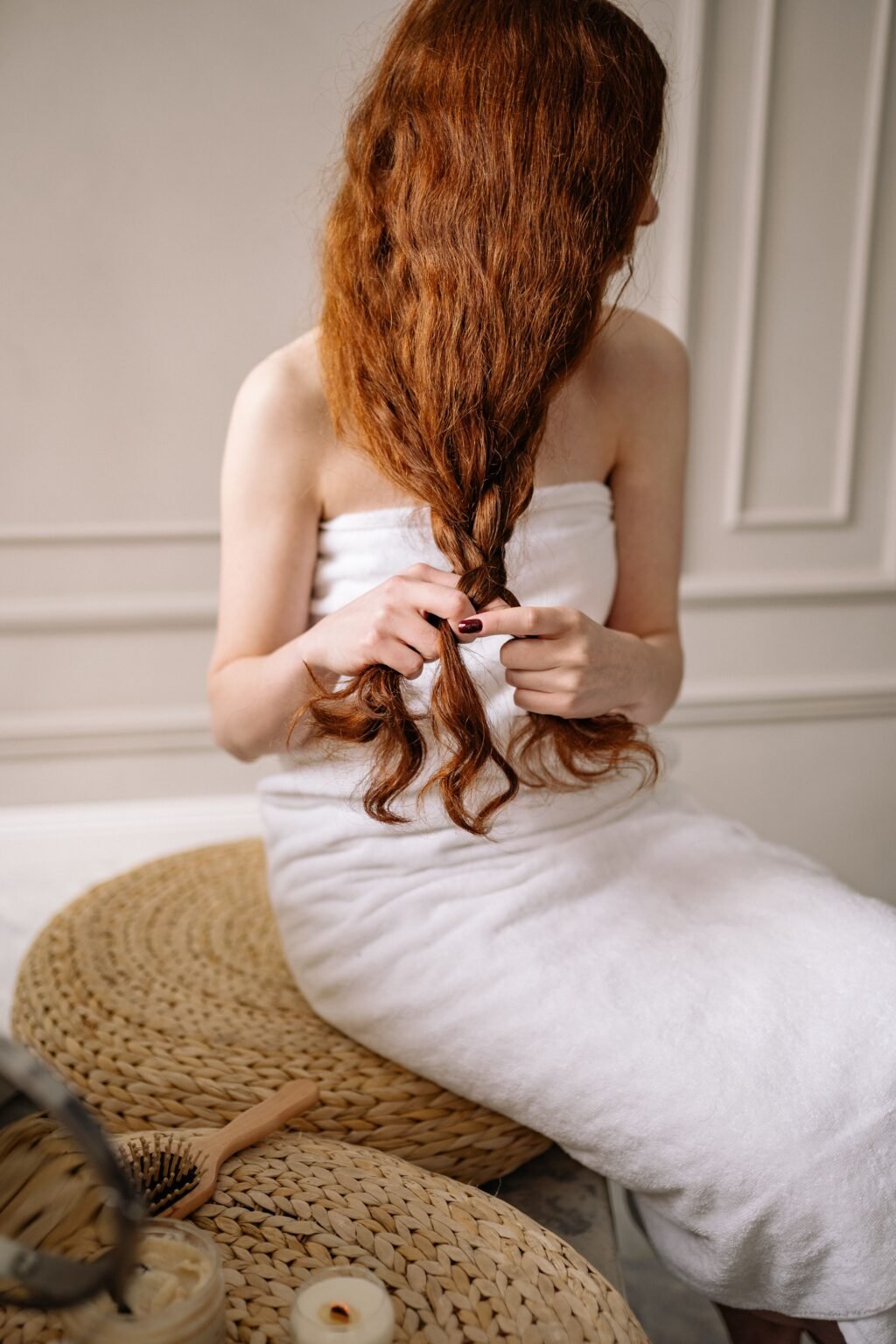
- Secure Long Hair Loosely: Tie long hair into a soft, loose braid or a high topknot using a silk scrunchie before bed to prevent tangling.