November nail care dry hands starts when many people first notice their nails changing. The polish still looks fine for a day or two, then the free edge starts to peel, a corner snags on a sweater, and the skin around the nails feels tight. It is rarely one bad manicure. It is usually the season: colder air outside, drier air inside, hotter showers, and hands washed more often.
November nail care for dry hands is not about buying a shelf of new products. It is about a short, repeatable routine — hydration before damage, gentle filing instead of tearing, and protection for the nail plate and the skin around it. This guide gives that routine in five steps, explains what to avoid, and helps you tell normal seasonal dryness from a problem worth showing to a professional.
| Step | What to do | How often | What it fixes |
|---|---|---|---|
| Hydrate | Oil or cream on nails and cuticles | Daily, morning and night | Dryness, peeling edges |
| File gently | One direction, fine file | Weekly, or when snagged | Splits, rough edges |
| Protect | Gloves for washing and cleaning | Every wet or chemical task | Softening, breakage |
| Trim smart | Short, rounded or squoval shape | Every 1-2 weeks | Snagging, corner breaks |
| Rest polish | Bare-nail days between manicures | A few days each cycle | Weak, thinning plates |
Why nails get dry and brittle in November
Cold air holds less moisture, and heated indoor air dries skin and nails further. Hot water strips natural oils from the hands, and frequent washing swells and shrinks the nail plate again and again, which weakens its layers. The result is familiar: nails that bend and then snap, white peeling layers at the tips, and cuticles that crack and catch.
Length makes the difference bigger. Longer nails lever more force onto a dry tip, so a nail that survived summer at a longer length may start breaking in November at the same length. That does not mean short nails are the only answer, but it does mean a November routine should be gentler than a summer one, and it should start with moisture rather than with a harder polish.
The 5-step November nail care routine
1. Hydrate nails and cuticles twice a day
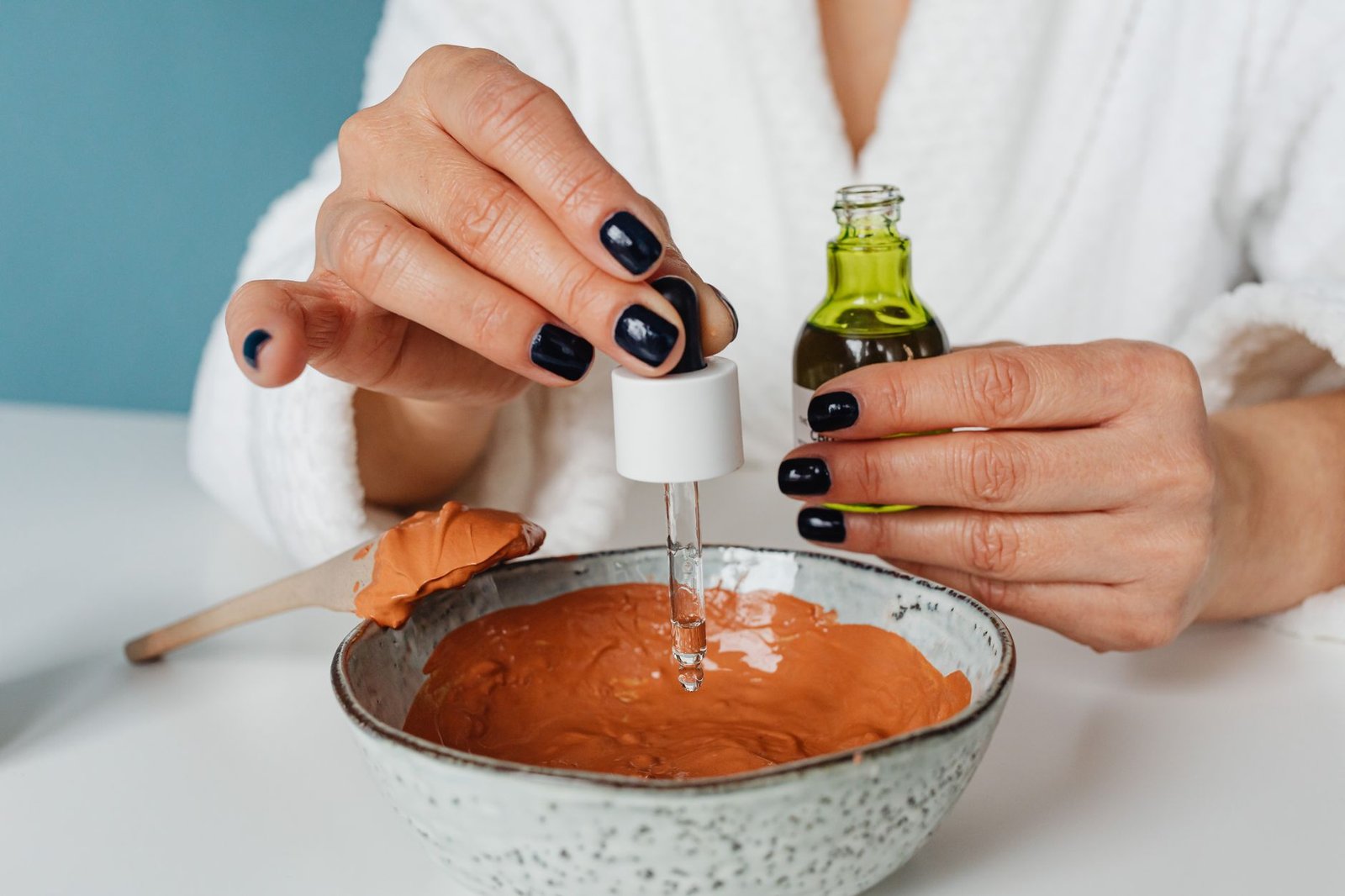
Apply a drop of cuticle oil or a plain hand cream over the nail plate and the skin around it, morning and night. Massage it in for a few seconds so it reaches the cuticle area, not just the fingertip. Night is the most useful time, because the product stays on while hands are not being washed.
2. File in one direction with a fine file
File from the outside edge toward the centre, in one direction only, instead of sawing back and forth. Sawing frays the free edge and invites peeling. Use a fine-grit file, keep the shape simple, and stop as soon as the edge feels smooth — over-filing thins the tip you are trying to protect.
3. Wear gloves for wet work and cleaning
Water alone softens nails, and cleaning products dry them further. Gloves for dishwashing, bathroom cleaning and any task with detergents are the single cheapest protection in this routine. If gloves feel clumsy, a thin cotton pair under rubber gloves keeps hands comfortable for longer jobs.
4. Keep a shorter, rounded shape for the season
A short rounded or soft squoval shape puts less leverage on a dry tip and snags less on knitwear. Trim little and often rather than cutting a lot at once, and file the corners lightly so they do not catch. You can grow length back when the air is less dry; November is for keeping what you have.
5. Give nails bare days between manicures
Polish itself is not the enemy, but back-to-back manicures with no break leave no time to notice dryness. A few bare days between sets let you oil the plate directly and see whether peeling is improving. If nails feel paper-thin after removal, that is the repair window — keep them short, hydrated and unpolished for a few days before the next set.
Length, shape and finish for dry November nails
| Choice | Best for dry hands | Why |
|---|---|---|
| Short, rounded | Yes — first choice | Least leverage, fewest snags |
| Short squoval | Yes | Neat look, still protected corners |
| Medium oval | Only if nails are strong | Softer corners, but more leverage |
| Long square or stiletto | Not this month | Corners catch and tips snap |
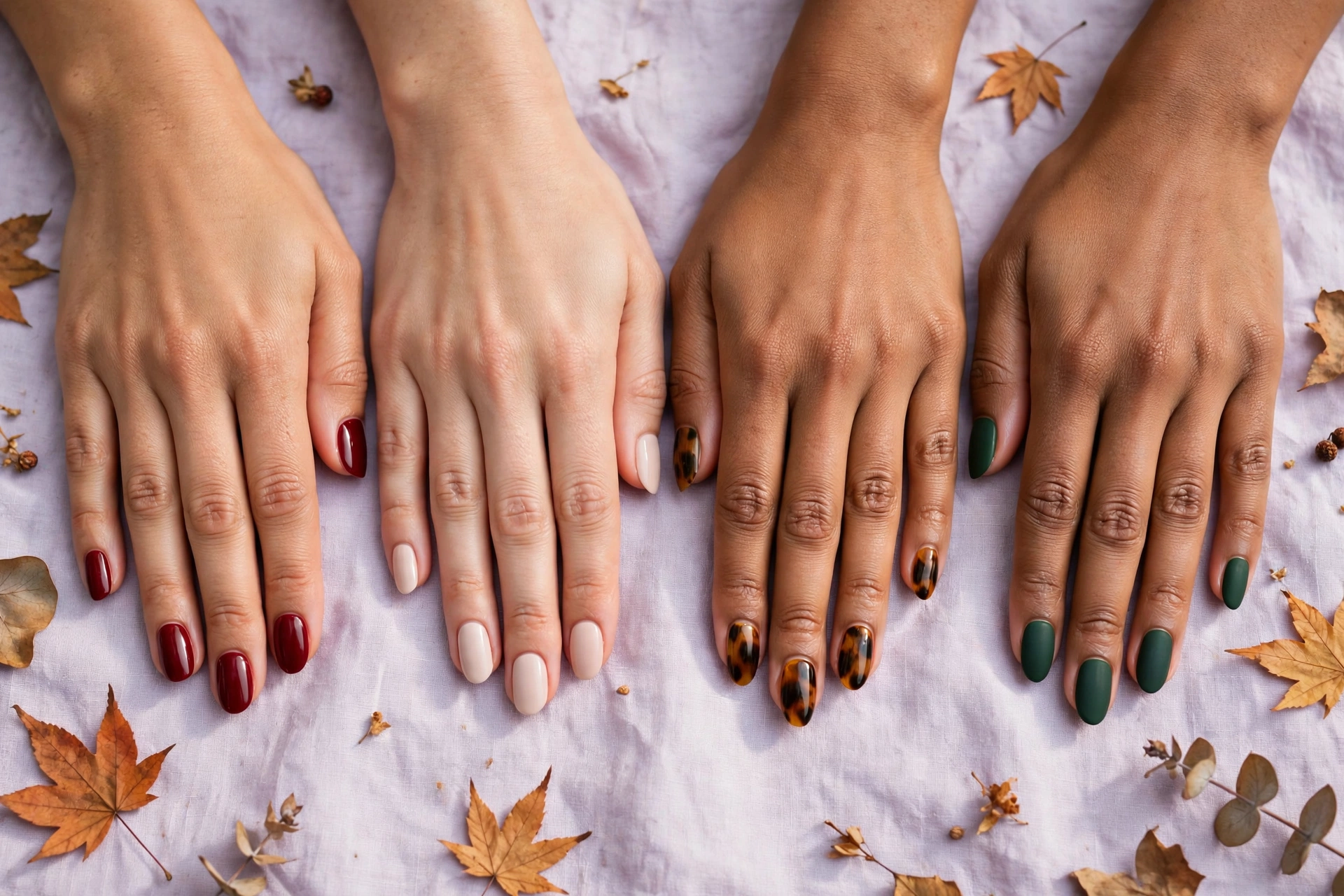
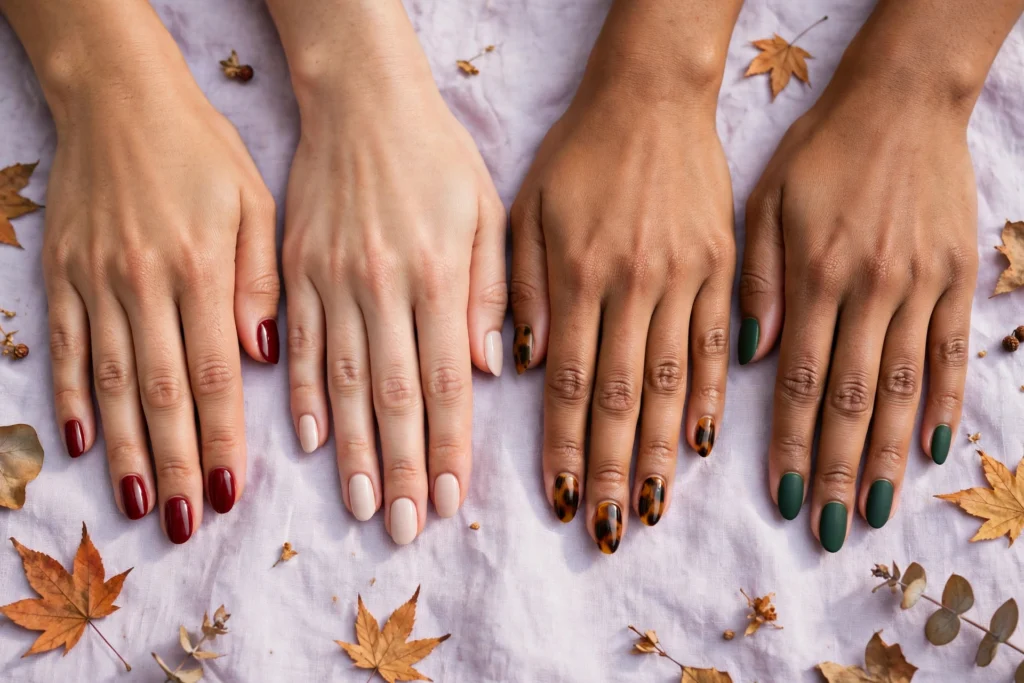
For finish, a sheer or milky neutral shows chips less than a dark opaque shade, and a single base coat plus top coat protects the plate without building up thick layers. Matte finishes look soft in autumn light but show dry cuticles more, so if cuticles are cracked, a glossy top coat and daily oil will look healthier than a matte set on dry skin.
What to avoid with November nail care dry hands
| Mistake | Why it hurts | Do this instead |
|---|---|---|
| Peeling polish off | Lifts nail layers with it | Soak off gently, then hydrate |
| Cutting cuticles | Opens skin to infection | Push back gently after a shower, or leave alone |
| Sawing nails back and forth | Frays and splits the edge | File one direction, fine grit |
| Very hot, long soaks | Strips oils, swells the plate | Lukewarm water, short soaks, moisturise after |
| Biting or picking a snag | Tears the plate deeper | File the snag smooth straight away |
| Skipping gloves for cleaning | Detergents dry nails fast | Gloves every time, even for a quick wipe |
When dryness is more than seasonal
Most November dryness improves within two weeks of daily hydration, gloves and a shorter shape. Seek professional advice if a nail stays painful, swollen or discoloured, if the skin around several nails is cracked and not healing, or if nails keep lifting, thickening or changing colour for no clear reason. Those signs are not fixed by oil or filing, and guessing at them wastes the weeks a clinician could use. This guide is general beauty guidance, not medical advice.
FAQs
Q1: How often should I oil my nails in November?
A: Twice a day is enough for most people — once in the morning and once at night. If hands are washed very often, reapply after washing and before bed rather than adding more products.
Q2: Does hand cream work, or do I need cuticle oil?
A: Both help. Hand cream covers the skin around the nail; a small amount of oil on the plate and cuticle area adds targeted moisture where cream rubs off fastest. Use cream for hands and oil for nails if you only pick one extra step.
Q3: Should I keep nails bare all winter?
A: No. Bare days between manicures are enough. Polish with a base coat can protect the plate, as long as removal is gentle and nails get a few unpolished days in each cycle.
Q4: Why do my nails peel more in cold weather?
A: Repeated wetting and drying swells and shrinks the nail plate, and cold, dry air removes moisture between washes. Gloves, lukewarm water and daily oil reduce both parts of that cycle.
Q5: Can I still wear dark November shades on dry nails?
A: Yes, on a healthy, hydrated plate with a base coat. If nails are actively peeling, keep them short and sheer for a week or two first — dark polish shows every chip and edge flaw sooner.
November nail care dry hands comes down to five habits: hydrate twice a day, file in one direction, wear gloves for wet work, keep a shorter rounded shape, and give nails bare days between manicures. That routine protects the nail plate, calms the cuticles and keeps a simple November manicure looking neat for longer. For the recovery side of nail care, the related guide on repairing nails after gel removal is the natural next read.
General beauty guidance only: shades and products vary by brand, test in daylight, and consult a professional for any persistent nail or skin problem.